
Breaking Weight Loss Barriers for a Better Life
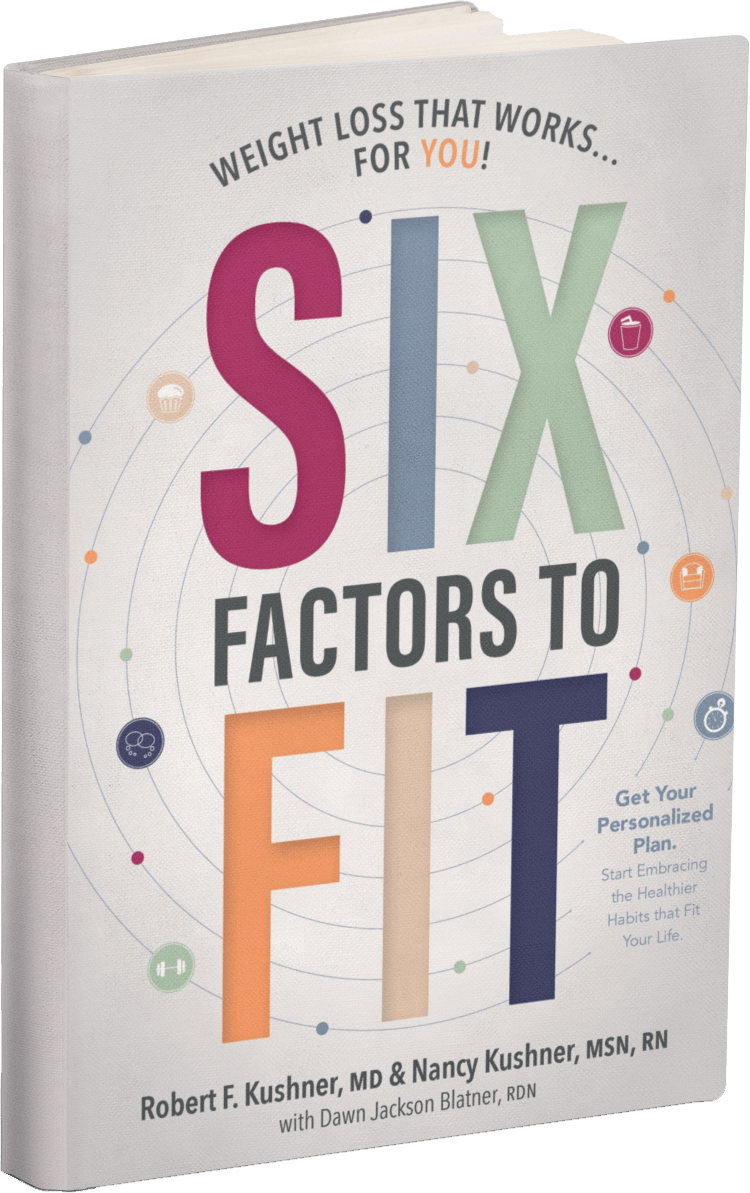
Welcome! My mission is to inspire and empower you to manage weight better while taking charge of your health habits - as outlined in my book
Six Factors to Fit: Weight Loss that Works for You!

AS SEEN IN










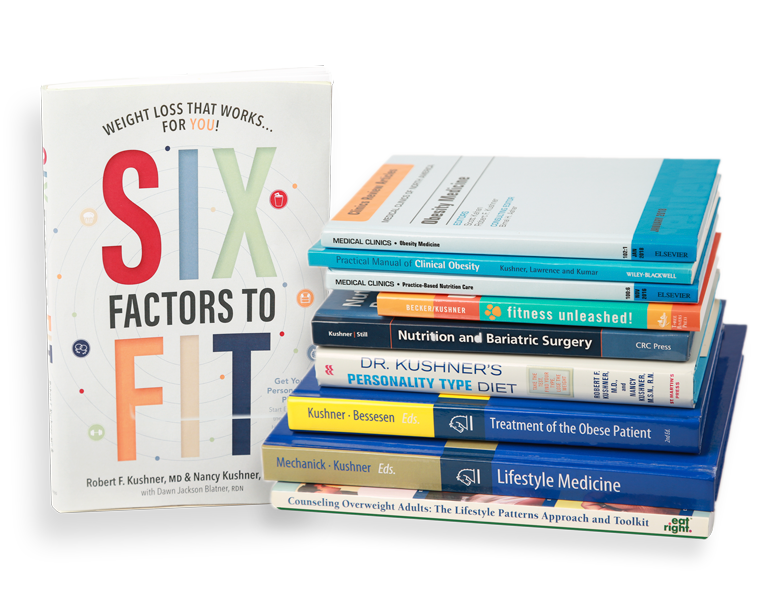
As the author (or editor) of 15 books, 65 book chapters and nearly 237 scientific articles on overweight, obesity and nutrition, Dr. Kushner has a unique skillset to help you reach your weight loss goals.
If you’re tired of going on and off diets, you’ve come to the right place. Through my latest research and development of the scientifically - validated Six Factor Quiz, I discovered the 6 factors that end up being major barriers to successful weight management.
Once you know your factors, I can personalize a plan that will help you lose weight and feel better.
You can take control of your lifestyle, eat better, move more, be less stressed, feel better and lose weight if you target your personal factors that create the greatest barriers to YOUR lasting success.
In Six Factors to Fit: Weight Loss that Works for You!, let us take you by the hand and show you the way.
Are you ready to try a refreshing and novel way of tackling your weight that starts with YOU?
Recent Posts

Focused Behavioral Counseling for Patients on GLP-1s
In my 40+ years as an obesity medicine physician specialist, my entire counseling philosophy and weight management program approach have been rooted in behavior change research related to diet, physical activity, sleep, stress and body image. Obesity medication and bariatric surgery were prescribed as an adjunct to lifestyle counseling. This traditional paradigm is now being…

Managing Persistence Problems -Starting and Stopping GLP-1 Medications
Most people don’t like taking medications – especially longterm. In fact, medication fatigue where individuals stop taking a new medication, like a statin or blood pressure pill, is commonplace. But the number of individuals stopping GLP-1 medications is especially concerning as studies show that over 50% of GLP-1 users discontinue the medication by 1 year…

Can Treating Obesity Improve Women’s Health and Fertility?
I recently had the exciting opportunity to educate gynecologists and fertility specialists throughout India on the role of semaglutide in women’s reproductive health. This allowed me to take a deep dive into the research and medical data answering the question: can obesity treatments improve women’s health outcomes and fertility rates? The answer is a resounding…

‘Treat to Target’ Considerations in Obesity Care
As the field of obesity medicine matures, clinicians and patients are asking: “What is the treatment target?” achievement of a targeted percentage weight loss? improved body mass index (BMI) or waist circumference? better function and quality of life? remission of weight-related complications? ability to taper or discontinue medications for other chronic disease treatments? or –…
