
Mindset
Before I help patients develop a personalized weight management plan, I want to better understand each person’s weight journey, that is, how they got to where they are today. Since no two patients are alike, providing personalized obesity care requires knowing more about each patient’s personal struggles, resources and life stressors. However, in the midst…
As you can see in this picture, I was a gymnast in high school. Being a gymnast was a part of my identity and I loved it – until I fell off the high bar during our state competition. Over time, my exercise identity changed to become a runner and more recently, a ballroom dancer.…
Lifestyle modification is foundational to all obesity care. This applies even to those taking the newer, highly effective obesity medications. Though the disease of obesity is complex, lifestyle modification can be simplified and should be targeted. One size does not fit all. This is the basis of my Six Factor approach to managing weight and…
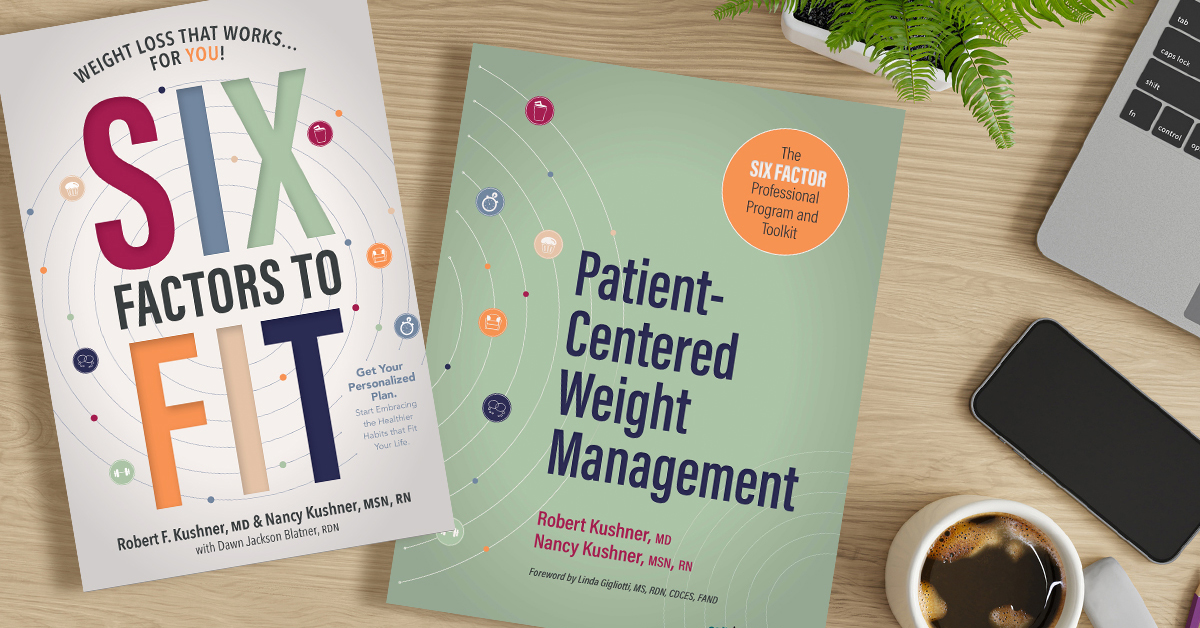
We are at a crossroads where the advancements in obesity science and treatment outpace a workforce that is not fully prepared to apply these breakthroughs. This is the first line in the Introduction to my just-released book published by the Academy of Nutrition and Dietetics, called Patient-Centered Weight Management: The Six Factor Professional Program and…
Lifestyle medicine is the nonpharmacological and nonprocedural management of chronic diseases that is practiced across many specialties in healthcare, as discussed in Lifestyle Medicine: Closing Research, Practice and Knowledge Gaps, our just-released book for health care professionals edited by Jeffrey Mechanick and myself. We were fortunate to have industry leaders author cutting-edge information in each…
We are a weight-focused society but when it comes to managing weight long term, having a weight-only narrow focus can be detrimental. Throughout my 4-decade career I have stressed the importance of lifestyle modification being foundational for losing weight and achieving better health. Now with an average 15-20% weight loss with the new injectable obesity…
One of my yearly medical student classes I teach at Northwestern University is helping our future physicians learn behavior change strategies to improve their own health. Examples of targeted health behaviors may include not exercising regularly, not eating enough fruits and vegetables, eating too many sweets or fast food, not getting enough hours of sleep…
Do you approach improving your weight and health with a more flexible or inflexible mindset? If you’re unsure, here are some questions to ask yourself: Are you someone who has strict rules you tell yourself you must follow? Do you have a long list of forbidden foods that you must not eat? Do you feel…
When managing body weight, you’re probably laser-focused on how your weight is changing day to day or week to week. This most likely applies whether or not you’re also taking obesity medications. Though I advocate tracking body weight as a good self-monitoring tool, weight is only 1 metric of health. If you’re someone who loses motivation easily…
What does it mean to be healthy? According to the World Health Organization (WHO), “health is not merely the absence of disease but is a state of complete physical, mental and social well-being.” In Christina Caron’s recent New York Times article, When the Prescription is for a Dance Class, not a Pill, she describes a…