
Dr. Robert Kushner

cell phone, planning

GLP-1s Quiet the Appetite. You Steer the Journey.

Having health goals is one thing; setting up your environment to make those goals effortless is another. Today’s GLP-1 medications are game-changers for managing appetite and body weight, doing  the biological heavy lifting. However, medications work best when paired with intentional behaviors. To get the most out of treatment and build long-term success, practical strategies

Read More
Wooden anchor laying on a tabletop

How Obesity Medications Can Anchor a Healthier Lifestyle

Obesity medications are frequently in the news for their ability to drive weight loss, but their true value goes much deeper: they can be a powerful gateway to long-term health. For many living with the chronic disease of obesity, these medications serve as an anchor. They secure foundational weight loss that previously felt completely out

Read More
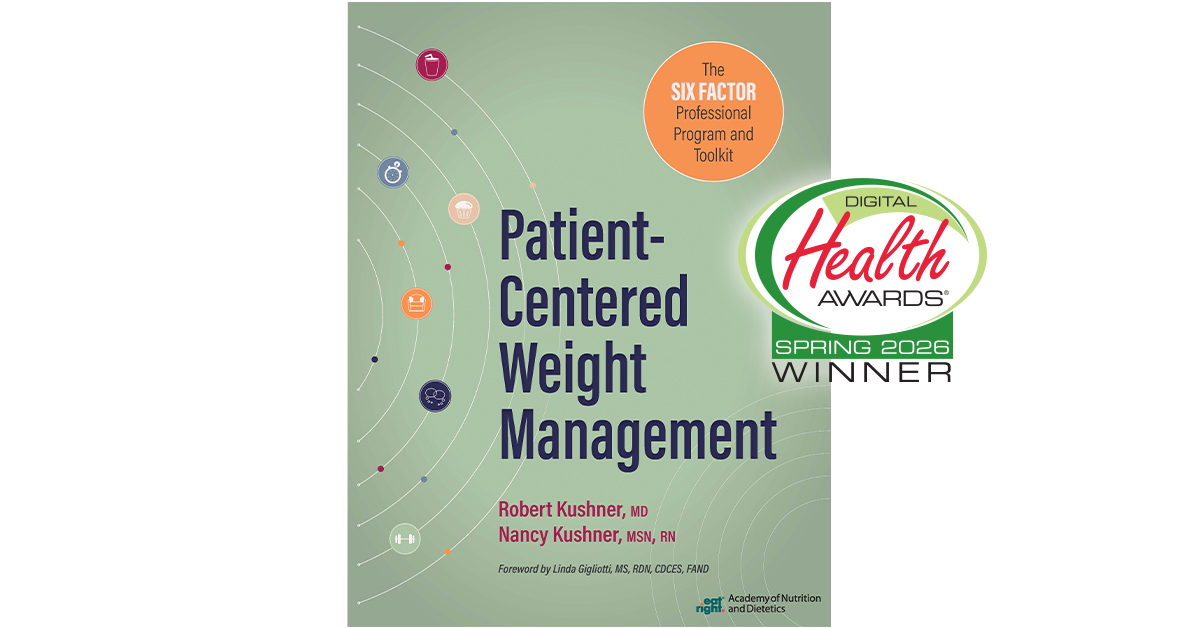
Dr. Kushner's book, "Patient-Centered Weight Management" with an overlay displaying the Health Awards logo

Celebrating Milestones: New Recognition for Patient-Centered Weight Management

Less than a year ago, my co-author Nancy Kushner, MSN, RN, and I celebrated the publication of our book, Patient-Centered Weight Management: The Six Factor Professional Program and Toolkit, published by the Academy of Nutrition and Dietetics. Three years in the making, this passion project was designed to empower clinicians with innovative, actionable strategies to

Read More
A dark haired with the word "FOCUS" stamped on the back of her hand

Focused Behavioral Counseling for Patients on GLP-1s

In my 40+ years as an obesity medicine physician specialist, my entire counseling philosophy and weight management program approach have been rooted in behavior change research related to diet, physical activity, sleep, stress and body image. Obesity medication and bariatric surgery were prescribed as an adjunct to lifestyle counseling. This traditional paradigm is now being

Read More
Vehicle Start/Stop button

Managing Persistence Problems -Starting and Stopping GLP-1 Medications

Most people don’t like taking medications – especially longterm. In fact, medication fatigue where individuals stop taking a new medication, like a statin or blood pressure pill, is commonplace. But the number of individuals stopping GLP-1 medications is especially concerning as studies show that over 50% of GLP-1 users discontinue the medication by 1 year

Read More
A woman's hands in the shape of a heart laying overtop her pregnant belly

Can Treating Obesity Improve Women’s Health and Fertility?

I recently had the exciting opportunity to educate gynecologists and fertility specialists throughout India on the role of semaglutide in women’s reproductive health. This allowed me to take a deep dive into the research and medical data answering the question: can obesity treatments improve women’s health outcomes and fertility rates? The answer is a resounding

Read More
Droplet of water dripping into a rippling puddle

Ripple Effects of GLP-1 Obesity Medications on Society

The effects of game-changing GLP-1 medications on individuals and society was the topic of my recent keynote address at the Northwestern University Alumni Association event in Naples, Florida. Individuals on GLP-1 medications are changing how they eat, shop, live, play and get their healthcare and companies are taking notice. We usually think of big tech

Read More
Red painted brick with the word "NEW" displayed on top of it

New Standards of Care Offer Proactive Approach to Prescribing Obesity Medications

With the advent of powerful obesity medications that address the biological basis of obesity, the field of obesity care is rapidly shifting. To reflect this, the first Standards of Care on pharmacologic treatment of obesity published by the American Diabetes Association (ADA) were just released. I had the honor of serving on the ADA Professional

Read More
The word, "TEAM" being held up by colorful little figures of people

Team-Based Obesity Care – in the Era of Highly Effective Medications

Obesity care is a team sport. One clinician does not have to shoulder all the responsibility nor is expected to have the necessary expertise in all aspects of care. And yet, in some circles, you may think that team-based obesity care is a thing of the past as individuals get prescriptions for obesity medications with

Read More
Wooden Scrabble tiles forming the word, "EMPATHY"

Empathy Goes Both Ways in Obesity Care

I enjoy speaking to healthcare professionals helping them identify efficient and effective approaches to patient-centered obesity care. One of the most interesting questions I received recently from physicians is how to approach the topic of weight with patients when they themselves are not comfortable with their own weight – be it higher than they want

Read More
cell phone, planning

GLP-1s Quiet the Appetite. You Steer the Journey.

Having health goals is one thing; setting up your environment to make those goals effortless is another. Today’s GLP-1 medications are game-changers for managing appetite and body weight, doing  the biological heavy lifting. However, medications work best when paired with intentional behaviors. To get the most out of treatment and build long-term success, practical strategies

Read More
Wooden anchor laying on a tabletop

How Obesity Medications Can Anchor a Healthier Lifestyle

Obesity medications are frequently in the news for their ability to drive weight loss, but their true value goes much deeper: they can be a powerful gateway to long-term health. For many living with the chronic disease of obesity, these medications serve as an anchor. They secure foundational weight loss that previously felt completely out

Read More
Dr. Kushner's book, "Patient-Centered Weight Management" with an overlay displaying the Health Awards logo

Celebrating Milestones: New Recognition for Patient-Centered Weight Management

Less than a year ago, my co-author Nancy Kushner, MSN, RN, and I celebrated the publication of our book, Patient-Centered Weight Management: The Six Factor Professional Program and Toolkit, published by the Academy of Nutrition and Dietetics. Three years in the making, this passion project was designed to empower clinicians with innovative, actionable strategies to

Read More
A dark haired with the word "FOCUS" stamped on the back of her hand

Focused Behavioral Counseling for Patients on GLP-1s

In my 40+ years as an obesity medicine physician specialist, my entire counseling philosophy and weight management program approach have been rooted in behavior change research related to diet, physical activity, sleep, stress and body image. Obesity medication and bariatric surgery were prescribed as an adjunct to lifestyle counseling. This traditional paradigm is now being

Read More
Vehicle Start/Stop button

Managing Persistence Problems -Starting and Stopping GLP-1 Medications

Most people don’t like taking medications – especially longterm. In fact, medication fatigue where individuals stop taking a new medication, like a statin or blood pressure pill, is commonplace. But the number of individuals stopping GLP-1 medications is especially concerning as studies show that over 50% of GLP-1 users discontinue the medication by 1 year

Read More
A woman's hands in the shape of a heart laying overtop her pregnant belly

Can Treating Obesity Improve Women’s Health and Fertility?

I recently had the exciting opportunity to educate gynecologists and fertility specialists throughout India on the role of semaglutide in women’s reproductive health. This allowed me to take a deep dive into the research and medical data answering the question: can obesity treatments improve women’s health outcomes and fertility rates? The answer is a resounding

Read More
Droplet of water dripping into a rippling puddle

Ripple Effects of GLP-1 Obesity Medications on Society

The effects of game-changing GLP-1 medications on individuals and society was the topic of my recent keynote address at the Northwestern University Alumni Association event in Naples, Florida. Individuals on GLP-1 medications are changing how they eat, shop, live, play and get their healthcare and companies are taking notice. We usually think of big tech

Read More
Red painted brick with the word "NEW" displayed on top of it

New Standards of Care Offer Proactive Approach to Prescribing Obesity Medications

With the advent of powerful obesity medications that address the biological basis of obesity, the field of obesity care is rapidly shifting. To reflect this, the first Standards of Care on pharmacologic treatment of obesity published by the American Diabetes Association (ADA) were just released. I had the honor of serving on the ADA Professional

Read More
The word, "TEAM" being held up by colorful little figures of people

Team-Based Obesity Care – in the Era of Highly Effective Medications

Obesity care is a team sport. One clinician does not have to shoulder all the responsibility nor is expected to have the necessary expertise in all aspects of care. And yet, in some circles, you may think that team-based obesity care is a thing of the past as individuals get prescriptions for obesity medications with

Read More
Wooden Scrabble tiles forming the word, "EMPATHY"

Empathy Goes Both Ways in Obesity Care

I enjoy speaking to healthcare professionals helping them identify efficient and effective approaches to patient-centered obesity care. One of the most interesting questions I received recently from physicians is how to approach the topic of weight with patients when they themselves are not comfortable with their own weight – be it higher than they want

Read More